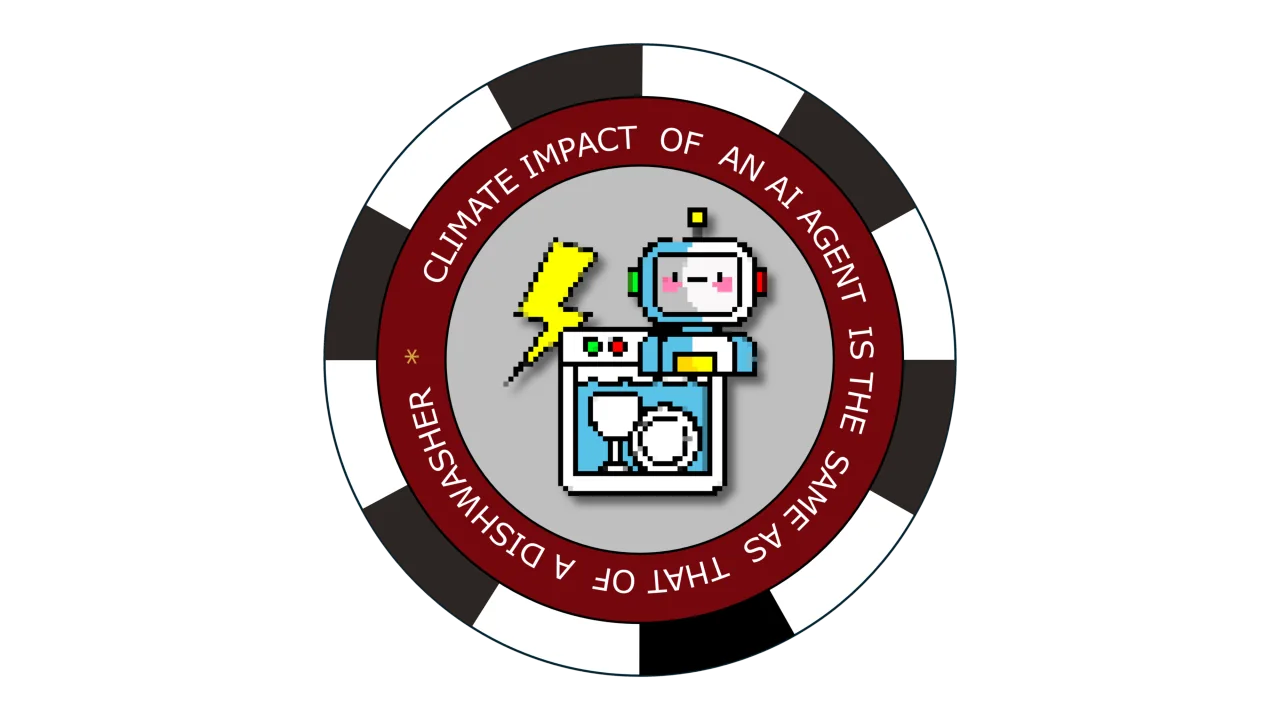
Why does washing several loads of dishes weigh on my conscience? And yet, running AI agents doesn't seem to bother me at all?
Adjusting and testing the dishwasher
Today I fixed and adjusted the settings and components of our dishwasher at home, and testing always involves running a full load of dishes. Fortunately, our large family provides plenty of material for testing.
In the midst of it all, I gradually noticed that I was becoming cautious about running new tests. After analyzing my thoughts, I realized that I just couldn’t bring myself to constantly wash large loads due to energy consumption—perhaps especially from a financial standpoint.
In my case, the dishwasher has higher-than-average energy consumption, meaning it is rated E. When run on a four-hour energy-saving program, consumption is
- 0.9 kWh
- 11 liters of water
- resulting in approximately 0.4 kg of CO2 emissions
Power consumption is roughly the same for dishwashers and AI agents
We’ve been running a campaign at several events now, comparing the use of AI agents to a dishwasher. Many people have been well aware of the high resource consumption of AI, but even more are surprised by just how high it is. Not all service providers publish the resource consumption of their AI services, but the European company Mistral AI, for example, has clearly presented various data on consumption.
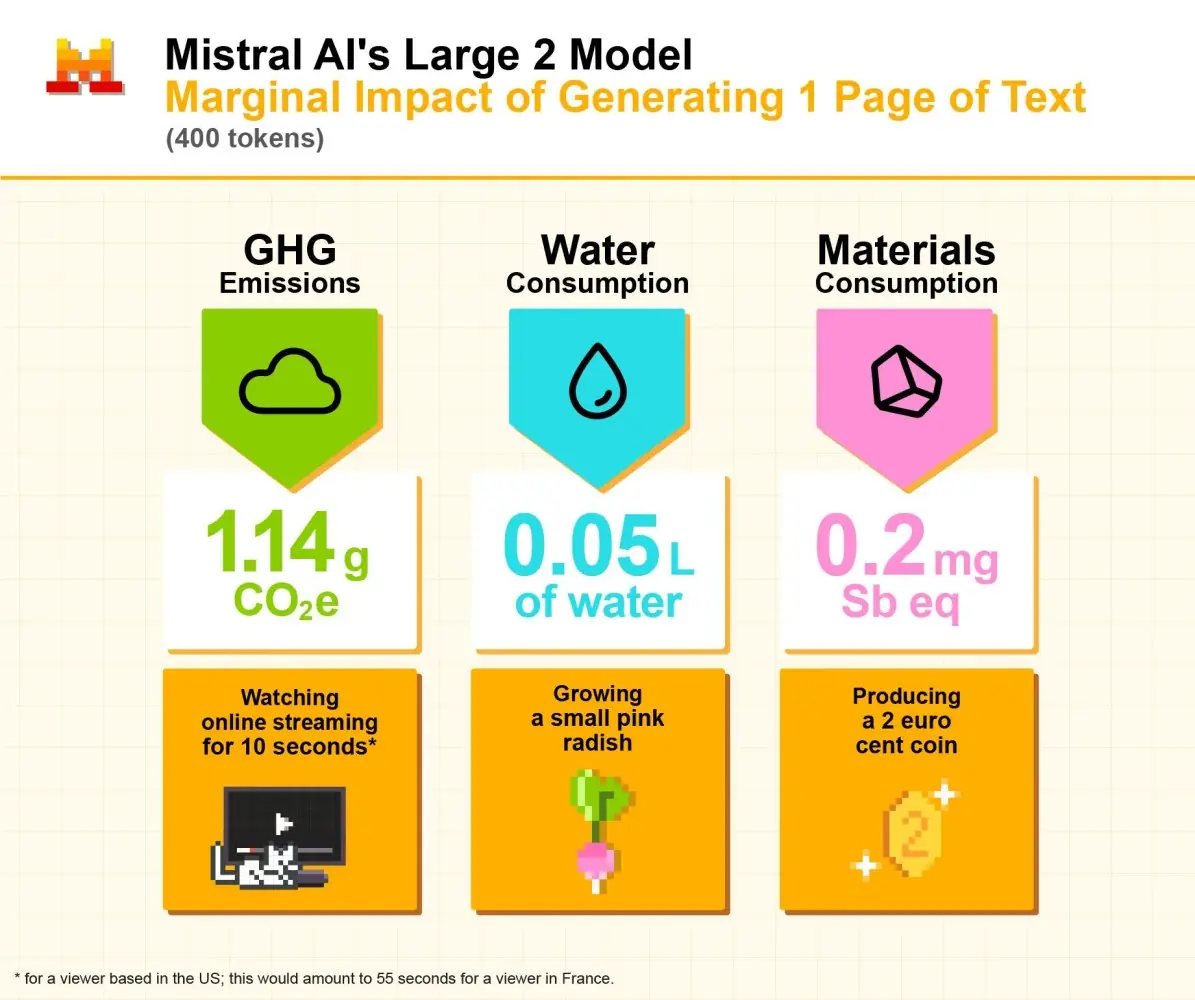
An AI agent performing a complex reasoning task consumes roughly the same amount of resources as a dishwasher. That is, in four hours it uses about
- 1.3 kWh of electricity
- about 10 liters of water
- resulting in approximately 0.45 kg of CO2 emissions
So why don’t I care about the energy consumption of AI?
When I use AI for many knowledge-based tasks, why doesn’t its energy consumption bother me—and why am I actually proud to be able to take advantage of this new technology? Do I view new IT achievements as such significant trailblazers that I can’t bear to think about their downside? AI services are usually run somewhere else in data centers, so I don’t hear or see the resource consumption, like the sounds of washing dishes.
At our company in Startecon Oy, we develop AI applications, but we still have to consider energy consumption because, going forward, this will also be included in sustainability reporting, and the carbon footprint of the applications themselves must be taken into account.
I attended a webinar that discussed the EU’s current and future directives and standards regarding data centers. A similar energy rating system, like the one for household appliances, may be on the way. The public sector may even be prohibited from purchasing energy-inefficient services.
Can we take a step back?
Home appliances were designed to make our daily lives easier and free up time for other things, but if you follow the latest kitchen trends, you’ll notice that people don’t always use every possible appliance these days. Maybe people are using food delivery or restaurant services more, which means there are fewer dishes to wash?
After all, dishes can still be washed by hand, as I often do at work and at the cottage, where there is no dishwasher. At the cottage, water comes directly from a well, and wastewater seeps back into the ground through a soakaway. At work, the sink usually gets by with less water.
Finding good balance
Well, dishwashers and washing machines work well, at least in large families with children, where daily life is filled with various tasks and responsibilities.
It’s probably pointless to ask parents of young children if they need a machine to help their life :)

The same certainly applies to the use of AI in certain work tasks, and that’s exactly how it should be. We use it where it is needed most and support those who need help.
The most important thing is to understand that these functions also consume natural resources; it is not a matter of stopping the use and development of technology, but rather ensuring it develops to a reasonable level.