Why startups developing AI agents are facing a sustainability crisis?
GPUs
One day I Googled my own name :) and stumbled upon this old website I used to maintain in the ’90s.
Back to the ‘90s
GPU chips had just hit the market. It was a major change for computer games, as games running at 320x240 pixel resolution saw a massive performance boost, which brought stunning image quality and fast refresh rates to the graphics.

The gaming experience was amazingly great, and those graphics cards weren’t very expensive, since after the recession in Finland, young adults could afford to buy new ones every now and then.
Back then, people didn’t even think about how much electricity they consumed; high power consumption was more of a source of pride, and the computer kept the house nice and warm. I was extremely proud to own two 3dfx Voodoo2 cards for running games, CAD systems, and multimedia applications.
General-Purpose GPUs for AI
In addition to gaming, parallel processing technology sparked interest among financial firms on Wall Street, whose pioneering work transformed the role of GPUs in general-purpose computing as well (GPGPU).
Today, GPU chips are generally the workhorses of AI services. Millions of these chips are in operation in today’s data centers, and they also consume a great deal of electricity and water, which is beginning to have significant environmental impacts.
Efforts have been made to significantly reduce the power consumption of GPU chips, and new data centers are adopting new, less water-intensive cooling technologies as well as methods for recycling heat.
The resource consumption caused by agentic AI appears to be a major cause for concern.
Modern AI Architectures
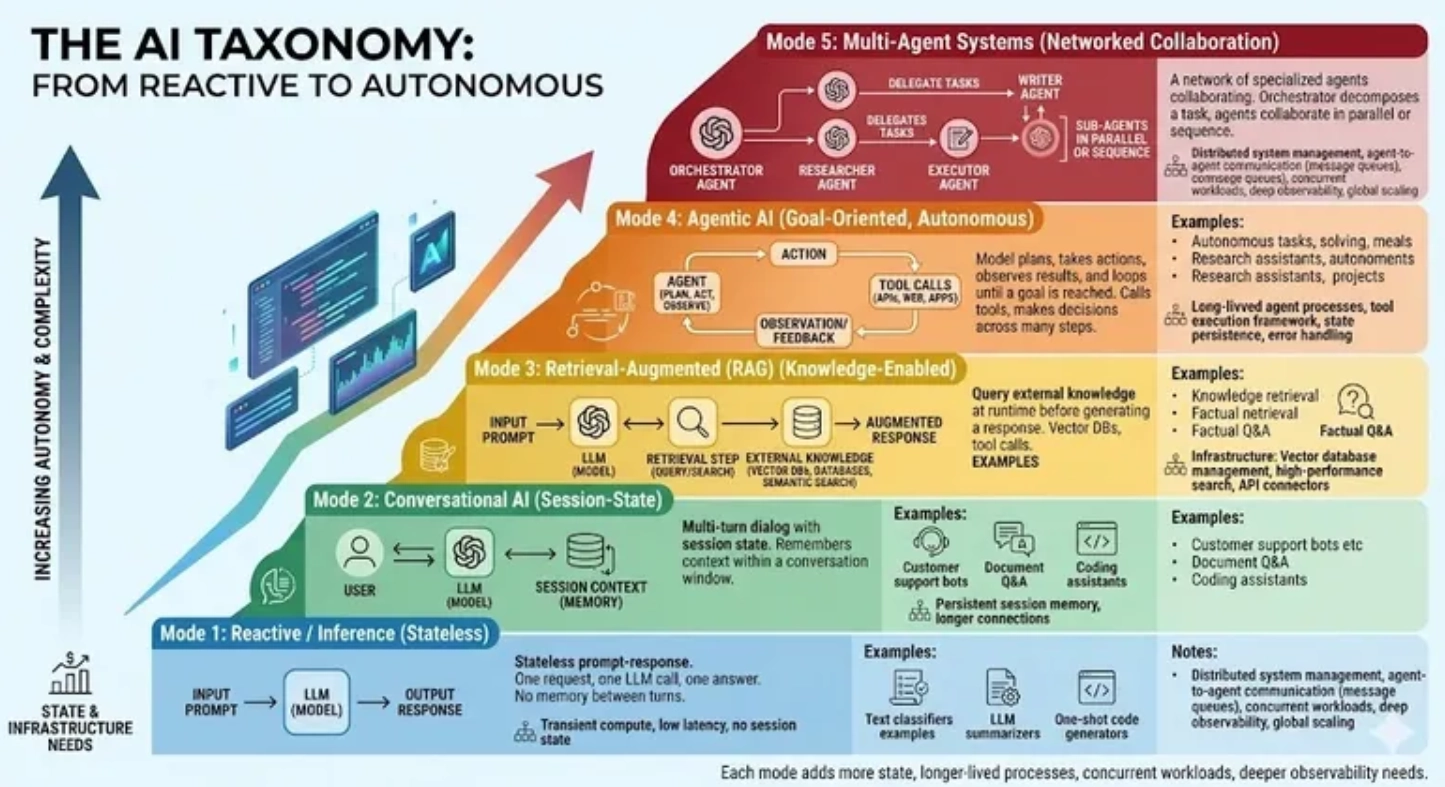
Even the old rule-based if-then-else logic still works well in many situations, and probabilistic models are useful for solving complex problems, but they lack explainability and traceability.
The following image perfectly illustrates how current AI models or architectures are designed to solve increasingly complex problems.
AI Doesn’t Scale as Traditional Software
The current software landscape is undergoing a major shift from traditional, rule-based, task-oriented software toward intelligent AI agent systems based on large language models (LLMs).
While AI agents offer unprecedented flexibility as they navigate autonomously in ambiguous and unstructured environments, they face fundamental scalability limitations compared to traditional software.
Unlike traditional software, which scales predictably through linear infrastructure expansion, AI agents require exponentially more computational power to maintain performance, making them notoriously resource-intensive and often less efficient in production environments.
The Planet Couldn’t Survive These Visions
The current craze surrounding AI-powered agent startups, companies aiming to implement autonomous systems in work processes such as customer service, sales, and data analysis, has created an atmosphere reminiscent of a gold rush.
However, different studies suggest that over 90% of these startups are built on a fragile foundation. And it’s worth considering just how significant the environmental impact would be if all of these AI startups’ expansion plans were to come to fruition. The Earth simply doesn’t have enough resources to meet those needs. So, it’s actually a good thing that things are the way they are.
Their business models promise automated scalability that the underlying technology cannot deliver, while simultaneously operating in an environmentally unsustainable manner.
High development costs, a lack of true differentiation, and extreme resource consumption make this wave of AI agent startups exceptionally unsustainable.
I can’t say that we’re in Startecon immune to this, but in order to survive, we need to find new ways to strengthen our market position and grow our business.
The Myth of Scalability
Unstable agents and high costs are hidden somewhere in behind the scenes. Startups developing AI agents often market themselves as “intelligent” and autonomous systems. In reality most of them are “thin shells” user interfaces built on top of large foundational models (such as GPT-4o or Claude).
While these demos impress early-stage investors, they do not scale to production use. A study by Carnegie Mellon University found that even state-of-the-art models failed in 70% of cases when performing complex, multi-step office tasks.
The business model is based on agent scaling, where more users mean higher revenue. In production, however, agents are not static software but iterative, reasoning systems. Agentic AI workflows can consume 10–50 times more tokens, and thus incur 10–50 times higher API costs, than simple chatbots.
Environmental Sustainability
In addition to economic vulnerability, the startups developing AI agents are not environmentally sustainable. The perception of AI as a “green” technology contradicts the data on its enormous infrastructure requirements.
Although training a model is a one-time event, reasoning — that is, user interaction with the agent — occurs millions of times a day.
Studies show that content generation tasks — creating text and images as well as generating summaries, which form the backbone of most agent applications — consume the most energy.
The environmental footprint of agents is exacerbated by the “embedded impact” of hardware manufacturing, and some estimates suggest that emissions from hardware production are double those associated with energy use.
A 2025 Mistral study found that a model ten times bigger will generate the environmental impact one order of magnitude larger than a smaller model for the same amount of generated tokens for the same task.
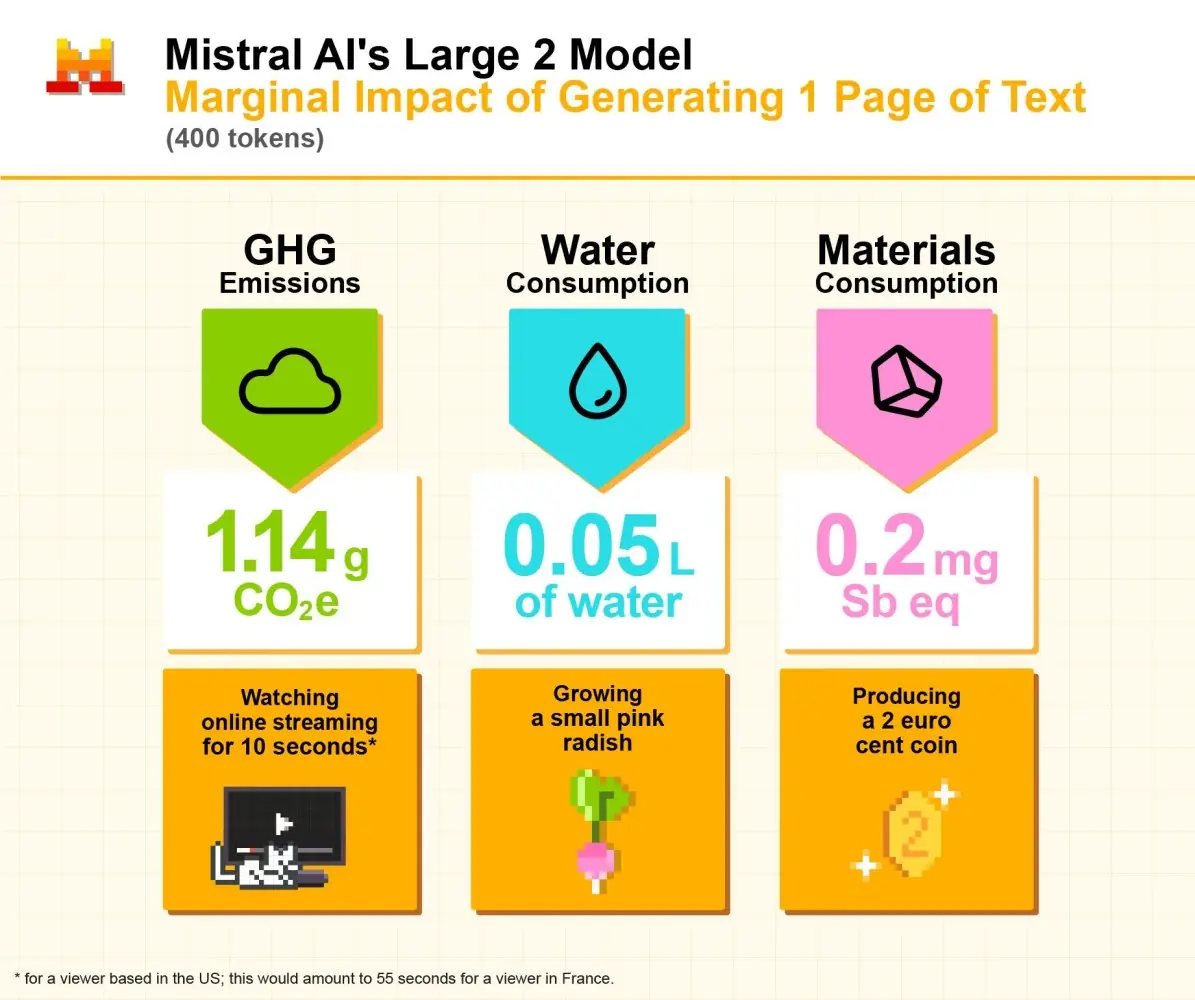
As agents become increasingly autonomous, they naturally consume more computational power, which increases their ecological footprint per user interaction.
Conclusion
While AI agents have a future, true sustainability in this space will belong to those who build proprietary data moats and energy-efficient architecture, rather than those merely wrapping AI in a new user interface.
More Sustainable Way
This Google’s study shows how different architectures can make a difference for accurate results as also for energy-efficiency.
But of course, you need always start design the systems most simplest end and go to more complex solutions even when you have possibility to use AI agent to do things for you, like for example design intelligent data structure, then use simpler machine learning models, and then go to the language models etc. but starting with smallest.
AI agents perform well in chaos, but it’s also possible to keep order.

Vision for AI Scalability
AI computing based on GPUs should move to more scalable platform, like we have in computing farms and clusters like Hadoop and SQL relational databases. When we can create an environment that supports generative models and enables concurrent use by multiple users — who may number in the millions or billions — we can speak of a scalable system.